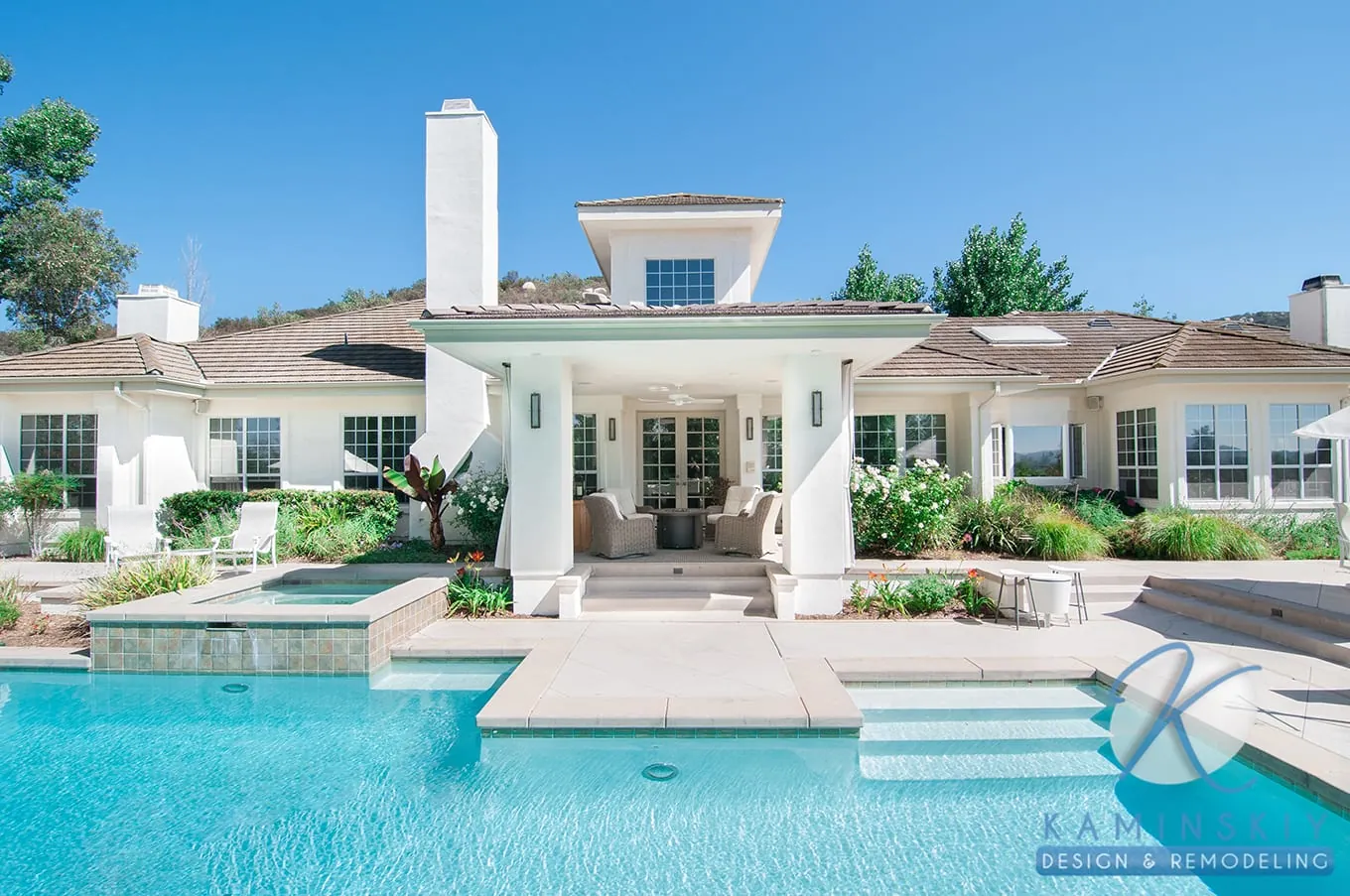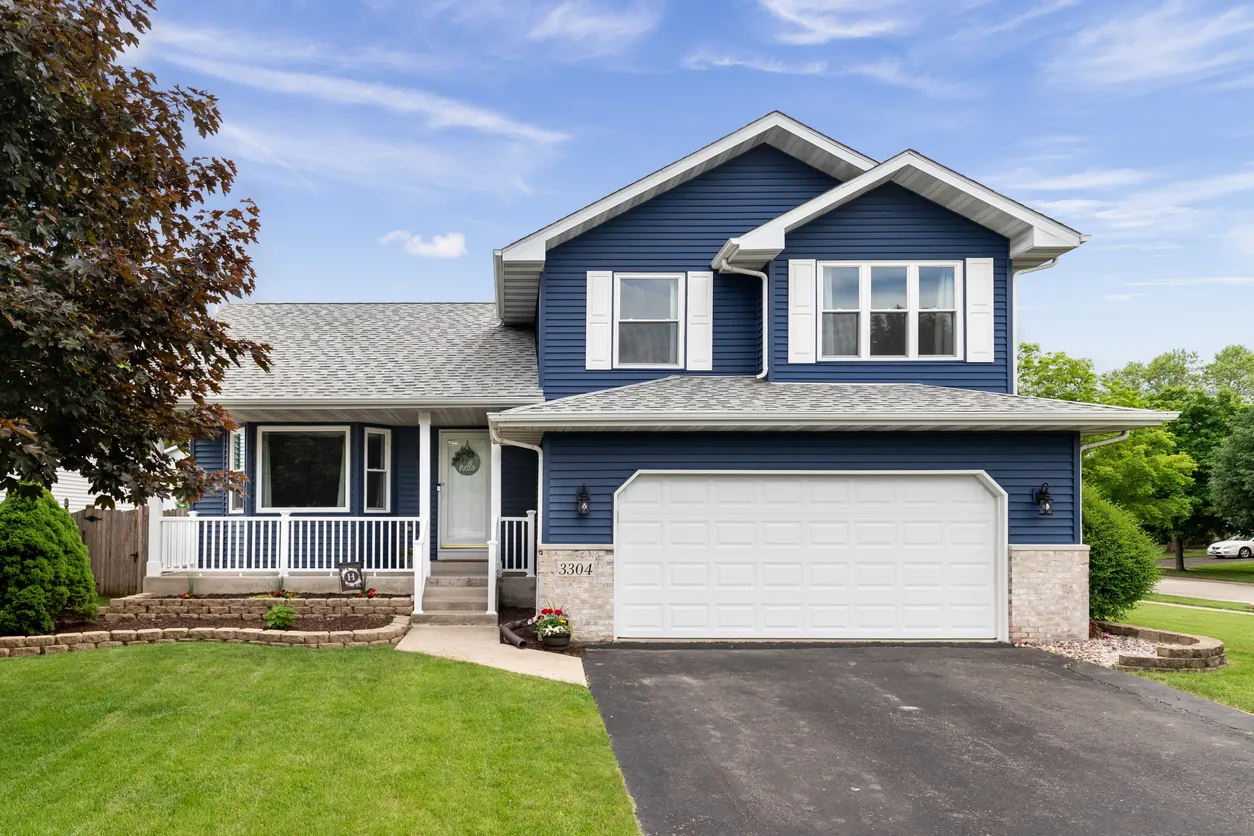


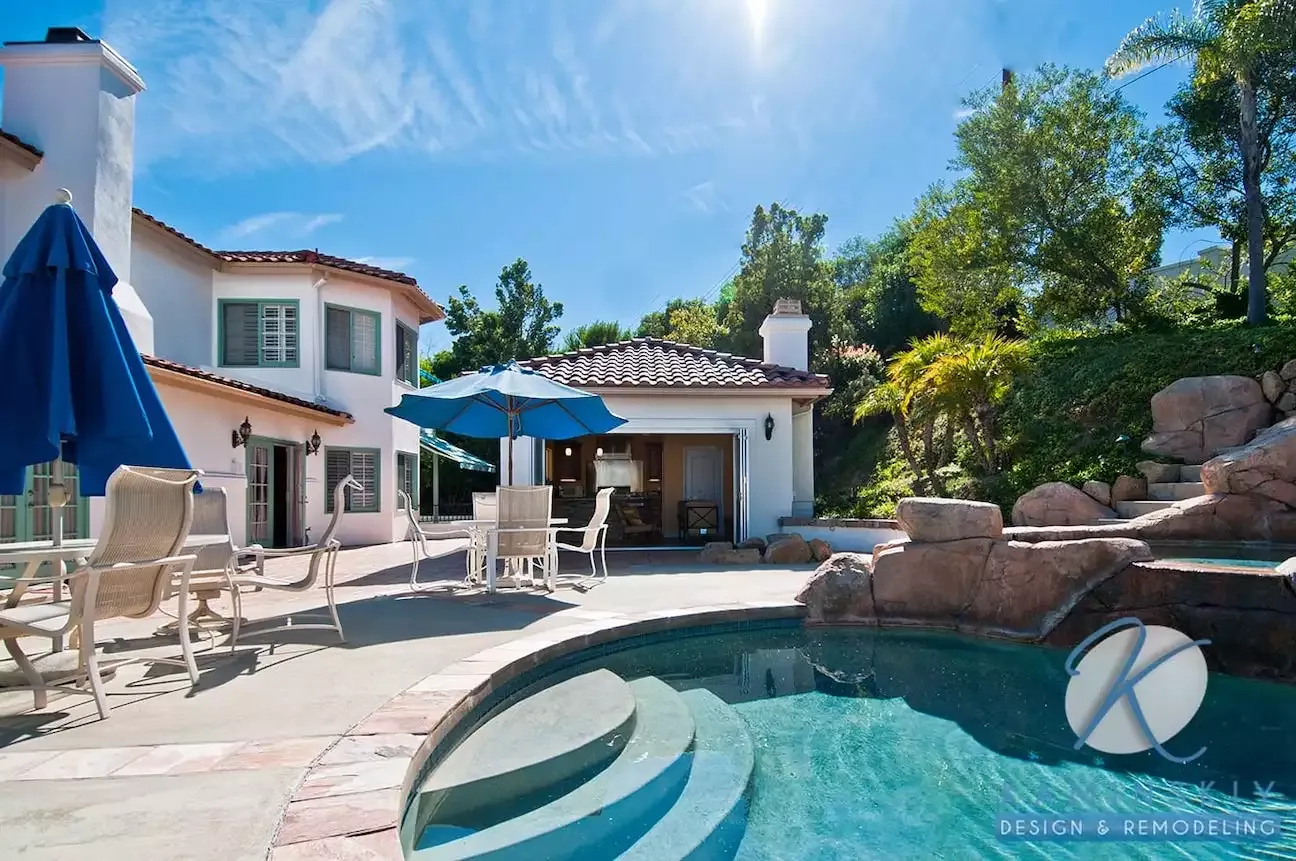


For most San Diego families in 2026, remodeling the house they own costs less than moving to a bigger one, both on the day they decide and every month after, and the gap is not close. Selling a $1,050,000 house, the county's September 2026 median, and buying a $1,500,000 one costs about $84,000 in commissions, taxes, closing costs and the move before the first payment on the new house. It swaps a mortgage that is probably under 4% for one at 7.18%, the national average in the first week of November 2026, and it resets the property tax to the new price. Adding a ground-floor room and remodeling the kitchen for $350,000 costs nothing to sell, keeps the old mortgage, and is reassessed only for what it adds. In the worked example below, the remodel runs about $6,050 a month and the move about $8,100.
That is the general answer. The specific one depends on four numbers you already know: what your house would sell for, what rate you are paying, what your assessed value is, and what the house you would buy costs. This guide walks one San Diego family through all four, with the market figures from the California Association of Realtors, Freddie Mac, the Federal Housing Finance Agency, the State Board of Equalization and the IRS, read in November 2026, and ends with the cases where moving still wins. Every number is from a named public source or from our own records, published as shares rather than counts.
The family in the example
A couple in their late forties, two children, a 1,700 square foot three-bedroom in Clairemont, Scripps Ranch, Poway or Chula Vista, any of the neighborhoods where the county median lives. They bought in 2016 for $650,000, refinanced in 2021 into a 30-year loan at 3.25%, and owe about $450,000. The house would sell for $1,050,000 today, the county's median single-family price in September 2026 according to the California Association of Realtors, and its assessed value, which has risen at most 2% a year under Proposition 13, is about $790,000. They need a fourth bedroom and a kitchen that was not designed in 1978. The house that already has both costs about $1,500,000 in the same school district.
Two paths. Sell and buy that house. Or add a 400 square foot ground-floor bedroom and bath and remodel the kitchen, a project our addition cost guide and kitchen cost guide put at about $350,000 in 2026, financed with a 20-year home equity loan. Here is what each path costs, in the order the money leaves.
What it costs to sell and buy
The first cost of moving is the move itself, and none of it buys a square foot. Agent commissions are the largest line. Since the National Association of Realtors' settlement took effect on August 17, 2024, offers of compensation can no longer be posted on the multiple listing service and buyers sign written agreements with their agents; commissions are, in NAR's own words, negotiable and not set by law. In practice the total paid by sellers has stayed near 5% of the price in the national surveys, so on $1,050,000 the line is about $52,500. The county's documentary transfer tax under Revenue and Taxation Code 11911 is 55 cents per $500 of price, $1.10 per $1,000, or $1,155 here; the City of San Diego adds no city transfer tax of its own, unlike Los Angeles or San Francisco. Escrow and title, the repairs and staging a listing agent asks for, and the movers run about $18,000 together for a house this size, and closing on the next house, with its own escrow, title and lender fees, about $12,000.
Then the tax question most families forget until escrow. The IRS lets a couple exclude up to $500,000 of gain on the sale of a main home, $250,000 for a single filer, if they owned and lived in it for two of the last five years (Topic 701). Our family's gain, roughly $1,050,000 less the $650,000 they paid, the selling costs and the improvements they made, is under the line and tax-free. A neighbor who bought the same house in 1998 for $280,000 has a gain near $700,000, and the $200,000 above the exclusion is taxed as a long-term capital gain at 15% or 20% depending on income under Topic 409, plus the 3.8% net investment income tax above $250,000 of income for a couple, plus California income tax, which taxes capital gains as ordinary income. For a long-time San Diego owner that line alone can reach $50,000 to $70,000, and it is a reason the county's long-time owners rarely sell to trade up.
The mortgage: the real cost of moving
The second cost is the one that lasts thirty years. The Federal Housing Finance Agency's National Mortgage Database shows that in the second quarter of 2026, 49.1% of all outstanding U.S. mortgages carried a rate below 4%, 19.2% were below 3%, and the average rate on everything outstanding was 4.4%. That share peaked at 65.2% in the first quarter of 2022 and has fallen about three points a year since, as life happens and people sell anyway. Freddie Mac's weekly survey put the 30-year fixed rate at 7.18% on November 5, 2026, down from 7.24% the week before and up from 6.22% a year earlier. A family that sells gives up a rate they will not see again and borrows at the new one.
In the example, the family nets about $528,000 from the sale after the $450,000 payoff and the selling costs, puts all of it down on the $1,500,000 house, and borrows about $984,000 at 7.18%. The principal and interest payment is about $6,660 a month, against the $2,263 they pay now. Staying and financing the $350,000 project on a 20-year home equity loan at the 6.9% the national surveys showed in early November adds about $2,690 a month and leaves the 3.25% mortgage untouched; a home equity line of credit, which prices off the prime rate of 7.00% in the Federal Reserve's H.15 release, would run about $2,190 a month interest-only during the draw. The one financing path that does not work in 2026 is the cash-out refinance: replacing the $450,000 loan with an $800,000 loan at 7.18% to raise the same $350,000 costs about $5,420 a month, because it reprices the whole balance. Harvard's Joint Center for Housing Studies reports that nationally about three quarters of improvement projects are paid in cash and only about 5% mainly with home equity, but that for room additions about a quarter of spending is equity-financed; the project loan is the normal way a San Diego addition gets built.
Property tax: Proposition 13 rewards staying, Proposition 19 softens leaving
The third cost is the one that compounds. Under Proposition 13 the county taxes 1% of a home's assessed value plus voter-approved bonds, about 1.1% to 1.2% in most of the county's tax rate areas and more where Mello-Roos districts apply, and the assessed value can rise no more than 2% a year until the house changes hands or is added to (County Treasurer-Tax Collector). Our family pays about $9,100 a year on their $790,000 assessment. Buy the $1,500,000 house and the tax becomes about $17,300. Add on, and only the addition is reassessed: the $350,000 of new construction adds about $4,000 a year, and the rest of the house keeps its 2016 base.
Proposition 19 changes the arithmetic for owners 55 and over, the severely disabled, and those displaced by a wildfire or declared disaster. Since April 1, 2021, under the State Board of Equalization's rules, they can carry the taxable value of the home they sell to a replacement anywhere in California, up to three times, if the replacement is bought within two years of the sale. If the new home costs more, the difference is added: $790,000 of taxable value plus the $450,000 by which $1,500,000 exceeds $1,050,000 gives a new taxable value of $1,240,000 and a tax bill near $14,300 rather than $17,300. The claim is form BOE-19-B, filed within three years with the assessor of the county where the new home sits. For a couple under 55, there is no transfer, and the bill is the full one.
| Line | Remodel and stay | Sell and buy at $1,500,000 |
|---|---|---|
| One-time costs | None to sell; design, engineering and the permit are inside the $350,000 | About $84,000: commissions $52,500, transfer tax $1,155, escrow, title, prep and the move about $18,000, closing on the next house about $12,000 |
| Capital gains tax | None | None for this family; $50,000 to $70,000 for a long-time owner whose gain exceeds the $500,000 exclusion |
| Mortgage | $450,000 at 3.25%, about $2,263 a month, unchanged | About $984,000 at 7.18%, about $6,660 a month |
| Project financing | $350,000 over 20 years at 6.9%, about $2,690 a month; a HELOC about $2,190 interest-only | None |
| Property tax | About $13,100 a year after the addition is reassessed (up from $9,100) | About $17,300 a year; about $14,300 if 55 or over with Proposition 19 |
| Monthly total | About $6,050 | About $8,100; about $7,850 with Proposition 19 |
| The house you end up with | Your lot, your street, your schools, with the rooms you designed | Someone else's choices, in a market with 3.7 months of inventory |
Download the one-page ledger (PDF)
Over ten years the monthly gap between remodeling and moving is about $245,000, on top of the $84,000 spent to move. The mover does own a $1,500,000 house at the end of it rather than a $1,400,000 one, and that difference is real. But it is paid for with a 7.18% mortgage on a house that was somebody else's compromise, and the market the mover is buying into had 3.7 months of unsold inventory statewide in September 2026, a median of 29 days on market, and county sales down 12% from a year earlier. There is not much to choose from, and what there is sells fast.
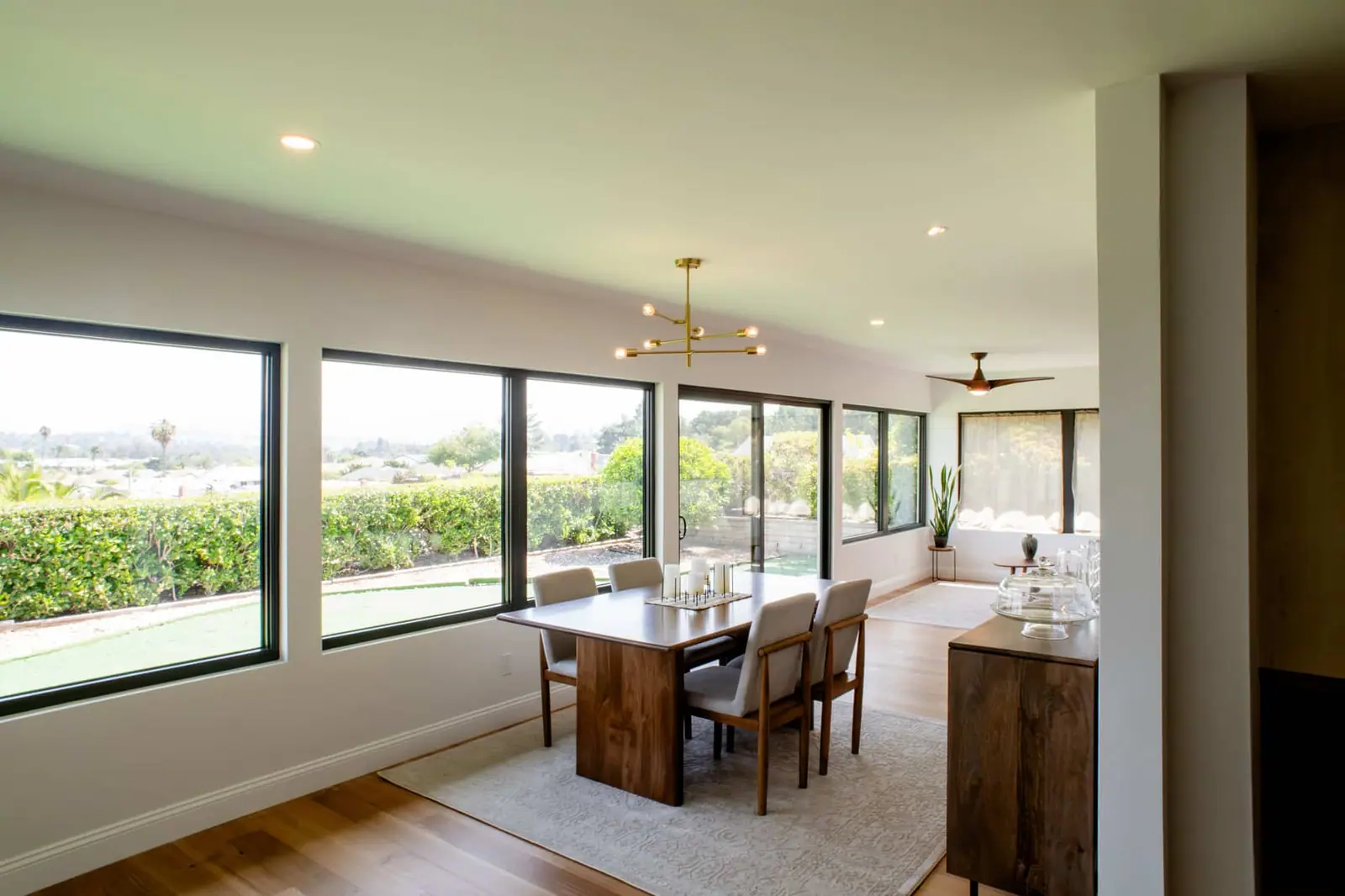
Want this math for your own house?
A complimentary in-home design consultation starts with the four numbers: what the house would sell for, what you are paying, what it is assessed at, and what you need the house to do. A designer walks the house, tells you what the lot and the permit path allow, and comes back with a range by scope. If the honest answer is that the house cannot become the one you need, you hear that first.
What $350,000 of remodeling buys, and what it does not
The remodel side of the ledger has its own fine print. A 400 square foot ground-floor addition with a bathroom runs $250,000 to $350,000 on its own in 2026 at $350 to $650 per square foot, and a full kitchen $100,000 to $150,000, so $350,000 for both is a disciplined plan: a modest addition and a kitchen that keeps its layout. It goes through full plan check with structural engineering and energy compliance, which our permit guide walks through, and it takes nine to twelve months from the first meeting to the last inspection, during which the family lives in a construction site or rents. Those months have a cost that the move does not, and the timelines guide is honest about them.
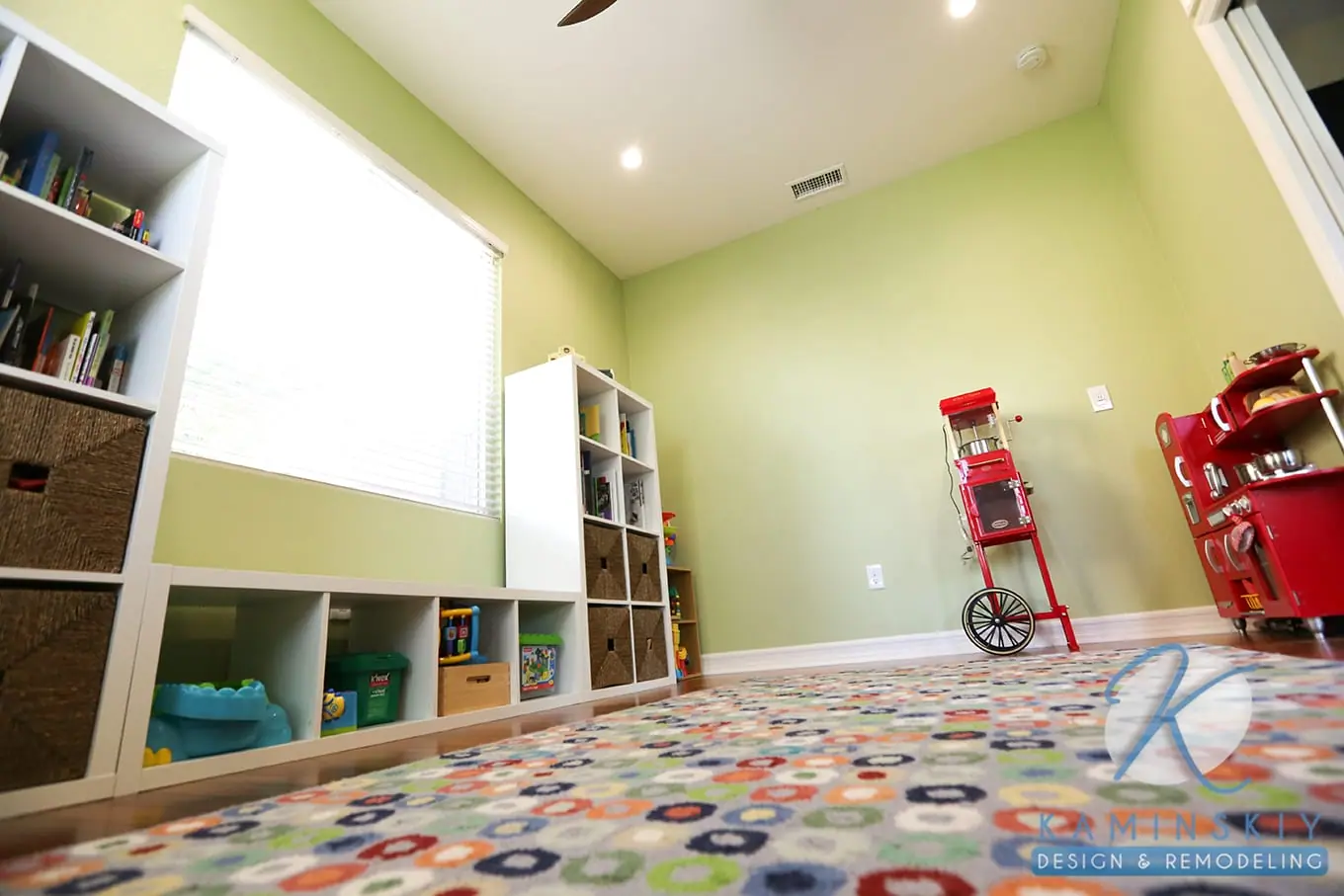
What the remodel buys is the exact house. Nationally, the Joint Center's Improving America's Housing 2025 describes a remodeling market that peaked at $611 billion in 2022 and stayed elevated because owners "locked in place" by rates and prices are spending to make their homes fit longer tenures; the share of owners who had moved recently fell from 6.8% in 2021 to about 5% in 2023, and owners 65 and over now account for 27% of all improvement spending, up from 14% two decades ago. NAR's 2025 Profile of Home Buyers and Sellers puts the median tenure of sellers at 11 years, an all-time high, and first-time buyers at 21% of the market, an all-time low. The country is staying put and building what it needs. San Diego, where the median house costs $1,050,000 and the mortgage on it is one nobody will see again, is the clearest case.
What our own inquiries say
Our records say the same thing from the other direction. Of the typed remodel inquiries we have received, more than half, 53%, are for more house rather than a better room: a room addition, an ADU, a whole home remodel, a multi-room plan or a converted garage, and additions are the largest single group. The single-room projects, kitchens, bathrooms and outdoor living, are 46%. Among the inquiries that arrive with a written description, those that mention having just bought the house, 2.4%, outnumber those that mention selling it, 0.4%, six to one; about 1% say outright that they are staying put, outgrowing the house or building their forever home. The family that remodels in San Diego has usually either just arrived, remodeling the house they could buy into the house they wanted, or has decided not to leave.
And the market shows it. A whole home remodel, in which the kitchen, the bathrooms, the floors and the systems are redone as one plan, has become our largest project type by revenue, and our whole home cost guide works the same stay-or-sell ledger from the whole house's side. The ADU guide covers the case where the extra room needs its own front door, and the ROI guide covers what each project returns when the house does eventually sell.
When moving still wins
The arithmetic is lopsided, and it is still not the whole decision. Moving is the right answer in five cases we see every year.
Setbacks, lot coverage, a slope, a septic field, an easement or a historic designation can leave no room for an addition and no permit path for a second story. A designer can usually tell you in the first meeting, and the City's zoning portal tells the rest. If the house cannot become the house you need, the math above does not apply.
A job in another county, a parent who needs you nearby, a school district, a commute that has doubled. A remodel fixes a house; it does not move it. When the neighborhood is the problem, the $84,000 and the higher rate are the price of solving the right problem.
A couple whose children have left, with a paid-off or small mortgage, who want less house: they sell high, carry their tax base to a smaller home anywhere in California, and may pay cash. For them the mortgage column is empty and the transfer costs are the only cost. Their remodel question is a different one, and our aging-in-place guide covers it.
A floor plan so compromised, a foundation so tired or a house so small that making it right costs more than the gap between it and the house that already is right. It is rarer than people fear in a county where the gap between a median house and a better one is $450,000, but it happens, and a proposal that lands there is a proposal to go look at the market.
Before you decide
How we built these numbers
The worked example uses the county's September 2026 median single-family price from the California Association of Realtors ($1,050,000, with sales down 12.2% from a year earlier; statewide inventory 3.7 months, median 29 days on market), a 2016 purchase at $650,000 refinanced in 2021 at 3.25% (payment on the original $520,000 balance), an assessed value of $790,000 (the purchase price raised 2% a year), Freddie Mac's 30-year rate of 7.18% for November 5, 2026, a 20-year home equity loan at 6.9% and a line of credit at 7.5% (prime 7.00% plus a half point, with the national rate surveys of the same week in that range), a property tax rate of 1.15% as representative of the county's tax rate areas, commissions at 5%, the transfer tax at $1.10 per $1,000, and $18,000 and $12,000 as typical 2026 figures for the other selling and buying costs. Change any input and the lines move; the shape of the answer does not until the mortgage rate falls near the rate the family already has. The remodel budget comes from our addition and kitchen cost guides. The first-party figures are from our inquiry records, typed project types and written descriptions, published as shares. The lock-in series is the FHFA National Mortgage Database file downloaded in November 2026. We refresh this guide when the Realtors' monthly report and the FHFA quarterly file update.
Sources read for this guide (November 2026)
- California Association of Realtors, September 2026 Home Sales and Price Report (released October 19, 2026) and county sales activity table.
- Freddie Mac, Primary Mortgage Market Survey, week of November 5, 2026 (30-year 7.18%, 15-year 6.57%, a year earlier 6.22%).
- Federal Housing Finance Agency, National Mortgage Database, Outstanding Residential Mortgage Statistics, quarterly file through 2026 Q2 (shares by rate bucket, average rate 4.4%, average payment $2,044).
- Federal Reserve, H.15 Selected Interest Rates, release of November 6, 2026 (bank prime loan 7.00%).
- California State Board of Equalization, Proposition 19 page and FAQs (base year value transfer, April 1, 2021; the greater-value formula and example; form BOE-19-B).
- County of San Diego Treasurer-Tax Collector, secured property taxes (the 1% rate plus voter-approved bonds; the 2% cap; reassessment on sale or new construction).
- California Revenue and Taxation Code 11911 (documentary transfer tax, 55 cents per $500).
- Internal Revenue Service, Topic 701 (sale of your home), Topic 409 (capital gains rates for 2025) and the Net Investment Income Tax page.
- National Association of Realtors, settlement FAQ (practice changes effective August 17, 2024; compensation negotiable and not set by law) and Top 10 Takeaways from the 2025 Profile of Home Buyers and Sellers (November 3, 2025).
- Harvard Joint Center for Housing Studies, Improving America's Housing 2025 (the remodeling market, lock-in and tenure, financing shares, owners 65 and over).
- Kaminskiy inquiry records, typed project types and written descriptions, 2025 to October 2026 (tools/blog_data/remodel_or_move.py; shares only); the Kaminskiy addition, kitchen, whole home and ADU cost guides, 2026.
Remodel or move in San Diego: your questions
For a family that owns a house with a mortgage under 4% and wants more room, remodeling is cheaper both at the start and every month. In our worked example, selling a $1,050,000 house and buying a $1,500,000 one costs about $84,000 in commissions, taxes, closing costs and the move, then about $8,100 a month in mortgage and property tax at 7.18%. Adding a ground-floor room and remodeling the kitchen for $350,000 costs nothing to sell, keeps the 3.25% mortgage, and runs about $6,050 a month with the project financed on a 20-year home equity loan. The remodel also ends with the house you designed rather than the one that happened to be for sale.
On the county's September 2026 median of $1,050,000, plan on about $52,500 in agent commissions at 5%, which since the 2024 settlement are negotiated rather than posted; $1,155 in county documentary transfer tax at $1.10 per $1,000 (the City of San Diego adds none); and roughly $18,000 for escrow and title, repairs and staging before listing, and the move itself. Closing on the next house adds about 1% of its price. The total lands near $84,000 before capital gains tax, which applies only to gain above $250,000 for a single filer or $500,000 for a couple.
Since April 1, 2021, a homeowner who is 55 or older, severely disabled, or displaced by a wildfire or declared disaster can transfer the taxable value of the home they sell to a replacement anywhere in California, up to three times, as long as the replacement is bought within two years of the sale. If the new home costs more, the difference is added: a home with a taxable value of $790,000 sold for $1,050,000 and replaced with a $1,500,000 house carries a new taxable value of about $1,240,000, not $1,500,000. The claim is form BOE-19-B, filed with the assessor of the county where the new home sits within three years of the purchase.
Only for what you add. Under Proposition 13 the county reassesses new construction at its value when it is completed and leaves the rest of the house at its existing taxable value, which rises at most 2% a year. A $350,000 addition and kitchen adds roughly $350,000 to the assessed value and about $4,000 a year in tax at the typical 1.1% to 1.2% rate; the same family moving to a $1,500,000 house would pay tax on all $1,500,000, about $17,300 a year. The addition's permit is what triggers the reassessment, and the assessor's notice follows completion.
In 2026, almost never a cash-out refinance if your current mortgage is under 5%, because it replaces the whole balance at today's rate: refinancing a $450,000 loan at 3.25% into an $800,000 loan at 7.18% to fund $350,000 of work costs about $5,400 a month, against about $2,260 plus the project loan. A home equity line of credit prices off the prime rate, 7.00% in November 2026, so expect 7% to 8% variable, interest-only during the draw, which suits a project paid in stages. A fixed-rate home equity loan ran near 6.9% in the national surveys, so $350,000 over 20 years is about $2,700 a month. Nationally, about a quarter of room-addition spending is financed with home equity; most smaller projects are paid in cash. Talk to your lender before the design agreement so the budget matches the financing.
When the house cannot become the house you need: a lot with no room for an addition or no permit path for a second story, a single-story home that must stay single-story on a lot that is full, a condo with no expansion rights, or a floor plan so compromised that the fix costs more than the difference between the two houses. It also wins when the reason to move is not the house: a job in another county, a school district, a family member elsewhere, or a 55-and-over couple who want less house and can carry their tax base under Proposition 19. A design-build firm should tell you this at the first meeting rather than sell you a plan; about half the typed inquiries we receive are for more house, and some of them end with our advice to look at the market instead.
Ready when you are