



"Is it worth it?" is the question underneath every cost question on this site, and the internet answers it with one chart: how much of a remodel's cost comes back when the house sells. That chart is real, it is useful, and for most San Diego families it is the wrong question, because they are not selling. This article gives you both halves: the published return for every project we build, read honestly at San Diego prices, and the return the chart cannot show, which is the one most of our clients are actually buying.
Every figure is from a named public source or from our own published pricing. The resale figures are Zonda's 2025 Cost vs. Value report for the Pacific region, the only rigorous public source that measures cost and resale value together; we quote them as they are published and say where our pricing differs and why.
The published return, project by project
Cost vs. Value models a specific scope in each city, prices it, and asks real estate professionals what the finished project would add to the sale price. Here are the 2025 Pacific-region results for the projects San Diego homeowners ask us about, cost beside resale value.
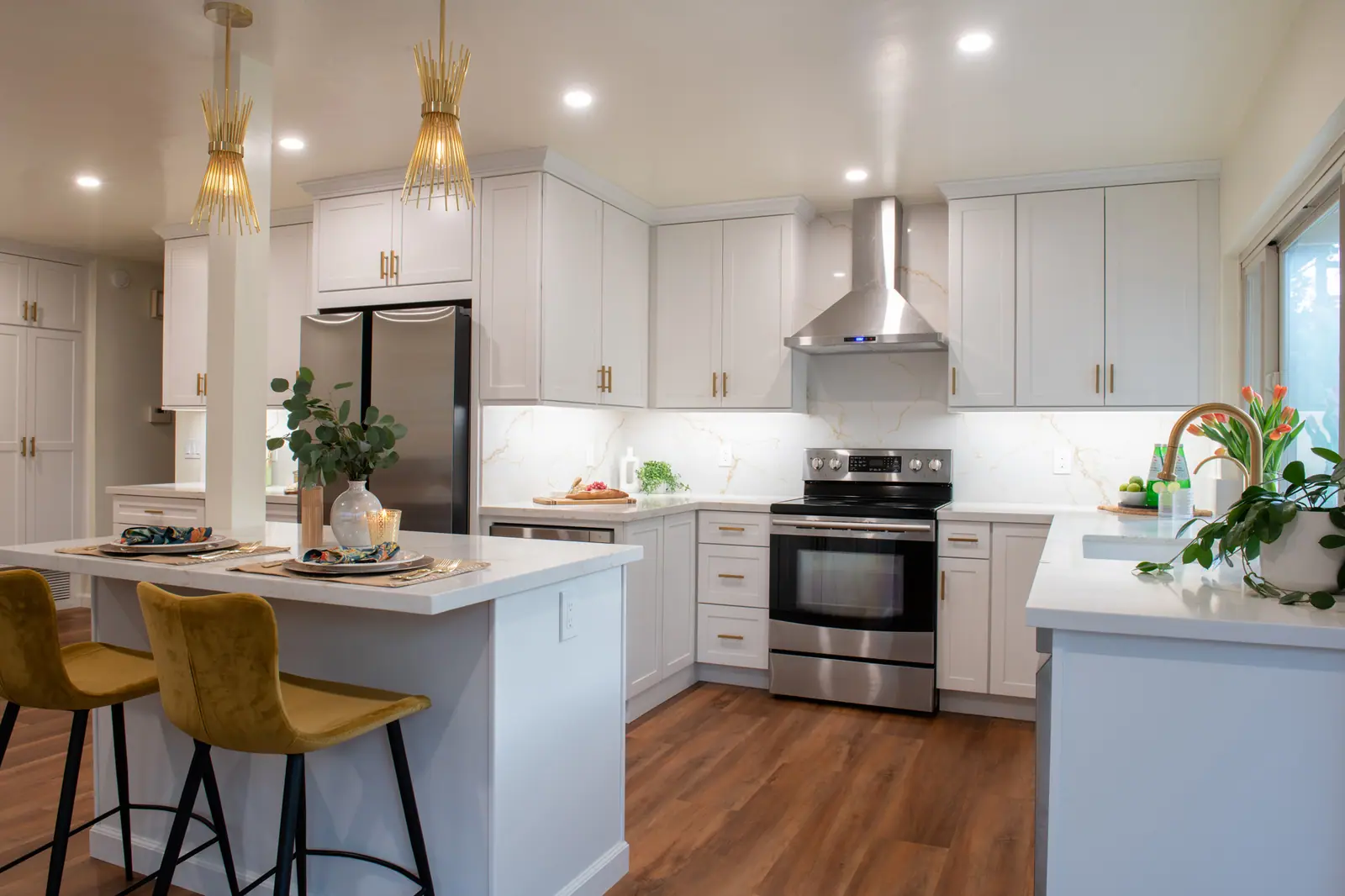
Three things stand out. The return is highest on the smallest jobs and falls as the project grows, because the report measures a buyer's reaction to a finished room, and a buyer pays for "new kitchen," not for the difference between quartz and quartzite. The bathroom is the best interior return per dollar at midrange, 91 cents back, which is why a dated bath is the first thing to fix before a sale. And the whole Pacific region averaged about 41 cents back across every project in the 2025 edition, with the cheapest exterior fixes at the top of the national list; a garage door replacement returned more than twice its cost nationally.
Our own pricing sits above the midrange scopes in that chart because the scopes differ. Cost vs. Value's midrange kitchen has laminate counters and no design or permit; its midrange bath is a 5-by-7 room with a porcelain tub and a standard vanity. A Kaminskiy kitchen runs $100,000 to $150,000 in the same layout and a bathroom $55,000 to $85,000, with the design, the permit, the waterproofing and the glass that the modeled scopes leave out. Read against the chart, that puts a Kaminskiy same-layout kitchen between the report's midrange and upscale lines, and the return at resale between their figures.
What buyers actually pay for
Twenty-one years of handing finished houses back to their owners, and watching some of them sell, come down to a short list of what moves a San Diego buyer and what does not.
- A second full bathroom in a house that has one. It changes the listing's category, not just its price.
- The kitchen opened to the living space. Buyers pay for the plan before the finishes.
- Light, flow and storage: a wall of glass to the yard, a pantry, a mudroom, a real primary closet.
- A primary suite where there was a bedroom and a hall bath.
- An ADU or a converted garage with a permit, valued on income and on comparable sales.
- The boring systems: a 200-amp panel, new windows, a roof, so the inspection report is short.
- Finishes above the neighborhood. The most expensive house on the street sells at the street's price.
- Personal rooms: a themed bar, a wine cellar, a home theater, a gym. Build them for yourself, not for the sale.
- A garage conversion without a permit. It is a liability on the disclosure, not a bedroom.
- A pool on a small lot. Half of San Diego buyers want one and the other half see maintenance.
- Trend finishes that date the house in five years.
- A remodel done twice: cheaply to sell, then again by the buyer.
The projects the chart does not model
Cost vs. Value prices a fixed scope in each city, so it covers the rooms that can be standardized: a kitchen, a bathroom, a bathroom addition, a primary suite, windows, a roof, siding. It does not model the three projects that make up most of our work: a whole home remodel, a ground-floor or second-story addition, or an ADU. Nationally, the one addition it does model, a midrange bathroom addition at about $65,000 in the Pacific region, returns roughly half its cost at resale, and that is the right expectation for added square footage in general: the appraiser values new space at the neighborhood's price per square foot, which in most of San Diego is below what it costs to build it, and the gap closes over the years you live in it.
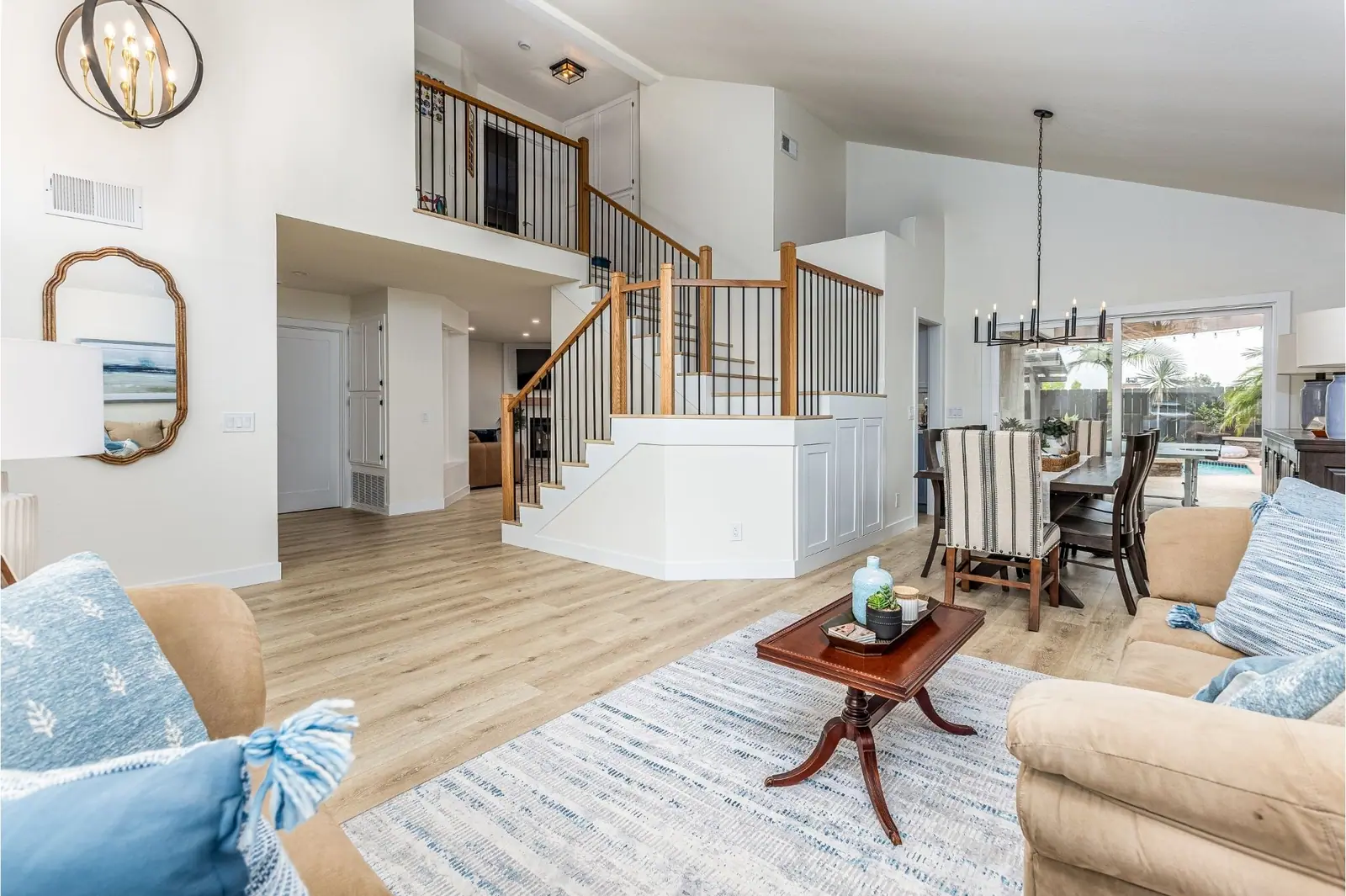
Valued by comparable sales of finished houses, not by a line item. A dated 1970s house brought to a current plan moves from the bottom of its neighborhood's range to the top, and the plan does the moving: the open kitchen, the primary suite, the second bath, the glass to the yard. Finishes above the neighborhood do not move it further. What one costs is in the whole home cost article.
Valued at the neighborhood's price per square foot. In coastal and north-county markets that price runs close to or above building cost, so an addition can approach break-even at resale; inland it usually does not, and the addition is for the family. A bedroom and bath that take a three-bedroom house to four changes the buyer pool, which matters more than the per-foot math. See the room addition cost article.
The one project with a second yardstick: income. An appraiser can value a permitted ADU on comparable sales with ADUs, now common in San Diego, or on the rent it earns, and where the city has opted in under state law, the unit can be sold as its own condominium. The return depends on who lives in it, a tenant, a parent or a home office, and the ADU cost article prices each type.
A 200-amp panel, a re-pipe, new windows, a roof: Cost vs. Value puts most exterior replacements near or above break-even nationally because a buyer prices a short inspection report. Inside a remodel they cost less than they would alone, because the walls are already open, which is the strongest argument for doing them in the same project rather than one at a time.
The return that is not on the chart
Most of the families who remodel with us are not selling. They considered moving, did the arithmetic, and stayed, and in San Diego in 2026 that arithmetic has rarely been this lopsided. The county's median single-family price was $1,050,000 in September 2026, a new 30-year loan cost about 7.3%, and half of the mortgages people already hold are below 4%. Selling to buy a better house costs about 5% of the sale in commissions, roughly $52,500, plus transfer tax, before a new mortgage at nearly twice the old rate on a larger balance. A $150,000 kitchen or a $450,000 whole home remodel competes with that, not with doing nothing.
Against that, the remodel keeps the rate, the neighborhood and the schools, and the tax basis never leaves. Harvard's Joint Center for Housing Studies reports that projects of $50,000 or more now account for more than half of all home improvement spending in the West and concentrate in homes built before 1980; San Diego, where two thirds of the housing was built before 1990, is the picture of why. The houses are old, the owners are staying, and the systems and the rooms come due together. The remodel is usually paid from savings and equity, and San Diego's long-time owners hold a great deal of it.
Want the number for your own house, both ways?
A complimentary in-home design consultation is how it starts: a designer sees the house, hears whether you are staying or selling, and comes back with a range by scope and a plan that holds its value either way. The whole home cost article has the full stay-or-sell ledger.
If you are selling: the short list
When the house is going on the market within two years, the chart is the right question, and the answer is to spend where the return is above one and stop.
| Do | Why | Leave alone |
|---|---|---|
| Paint, lighting, hardware, a minor kitchen refresh | The first dollars on a dated room return the most; a minor kitchen refresh returns 129% in the Pacific region | A full custom kitchen: the buyer will redo it anyway, and it returns 39% at upscale |
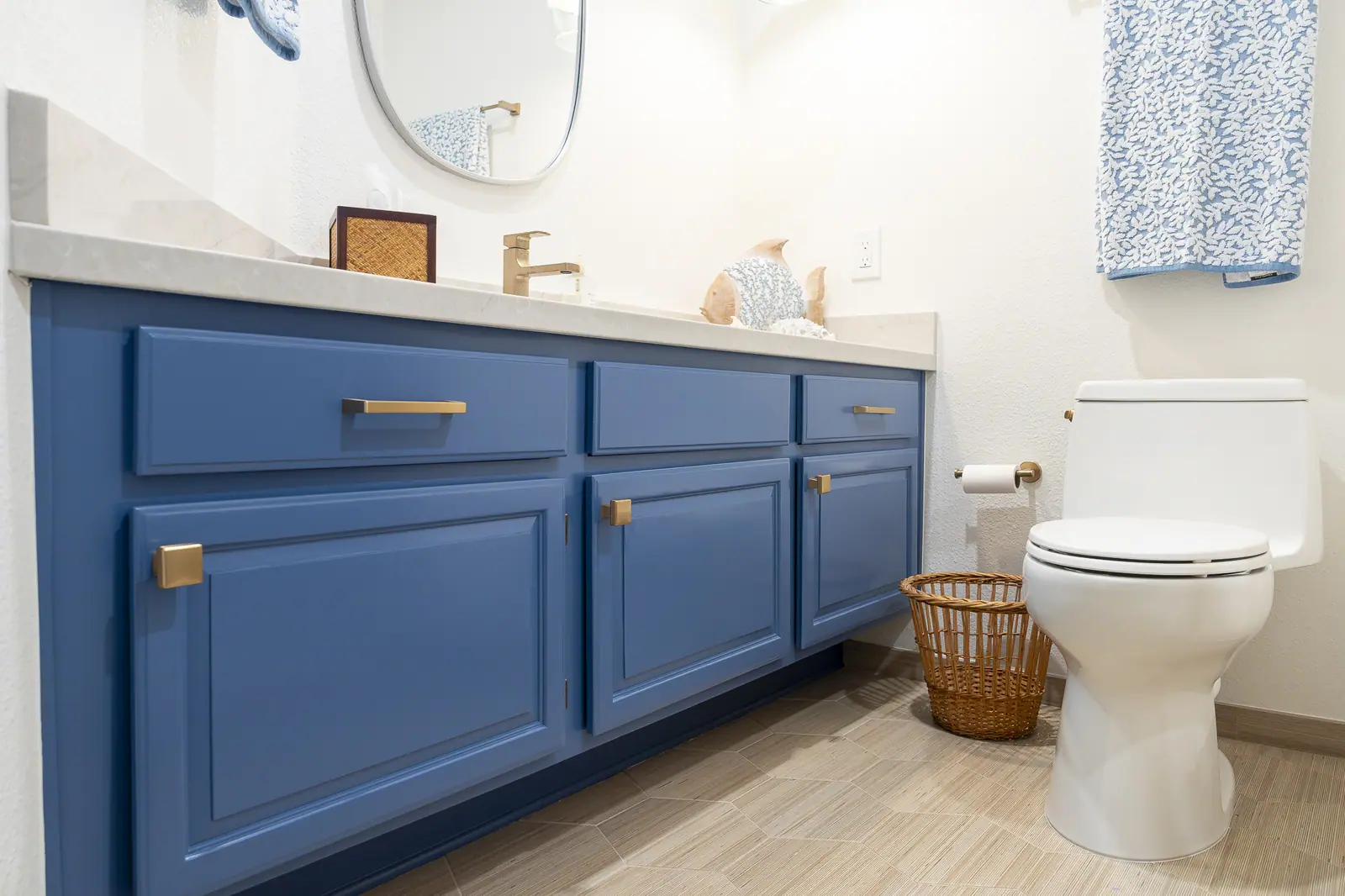
| A midrange bathroom remodel in its layout | 91% returned, and a dated bath is the first thing an inspector and a buyer photograph | A spa bath: 45% returned, because the finishes are personal |
| The inspection list: panel, roof leaks, windows, drainage | A short inspection report protects the price more than any finish | Anything without a permit; legalize it or disclose it |
| Curb appeal and the garage door | The cheapest exterior fixes top the national list; a garage door returns more than twice its cost | A pool, a themed room, a conversion without a permit |
If you are staying: the three rules that keep the value
- Stay inside the neighborhood's range. Build the best version of your house, not the most expensive house on the street. Your designer knows the range; ask.
- Make the money visible. Kitchens, bathrooms, light, flow and storage are where buyers look and where families live. Systems come along because the walls are open, not as the headline.
- Build what the next owner would have built. A second full bath, an open plan, a primary suite, an ADU with a permit. Build the personal rooms too, knowing they are for you.
What each project costs is in its own article: the kitchen, the bathroom, the whole home, the room addition and the ADU.
How we built these numbers
The resale figures are Zonda's Remodeling Cost vs. Value 2025, Pacific region, quoted as published: job cost, resale value and the percentage recouped for each modeled scope. The regional average and the national garage-door figure are from the same report's 2025 edition. The San Diego market figures are the California Association of Realtors' September 2026 report, Freddie Mac's Primary Mortgage Market Survey of October 22, 2026, and Realtor.com's analysis of the federal mortgage database, all read in October 2026. Our pricing is our own published pricing, the same figures in our cost articles and calculators. Nothing here is a prediction of what any house will sell for.
Sources read for this article (October 2026)
- Zonda, Remodeling Cost vs. Value 2025, Pacific region and national, and the 2025 key trends summary (JLC).
- California Association of Realtors, September 2026 home sales and price report; Freddie Mac, Primary Mortgage Market Survey (October 22, 2026); Realtor.com analysis of the FHFA National Mortgage Database (Q2 2026); California State Board of Equalization, Proposition 19.
- Harvard Joint Center for Housing Studies, Improving America's Housing 2025.
- U.S. Census Bureau, American Community Survey 2024, year structure built, San Diego County.
- Kaminskiy Design & Remodeling, published pricing and the cost articles on this site.
Remodeling ROI in San Diego: your questions
By the published numbers, the small ones: Zonda's 2025 Cost vs. Value report for the Pacific region puts a minor midrange kitchen refresh at 129% of its cost recouped at resale and a midrange bathroom at 91%, while a midrange major kitchen recoups 57%, an upscale bathroom 45% and an upscale kitchen 39%. Nationally, a garage door replacement recoups more than twice its cost. The pattern is that the first dollars spent on a dated room return the most, and the return per dollar falls as the finishes climb.
At resale, a midrange kitchen returns a little over half its cost in the Pacific region; for a family staying ten years or more, the kitchen is the most-used room in the house and the one buyers judge first, which is why we build it to the house rather than to the chart. The honest test is the one in our kitchen cost article: price the kitchen you want from the scope, then ask whether the house and the years ahead deserve it.
More than any other interior project per dollar: a midrange bathroom remodel recoups 91% of its cost at resale in the Pacific region's 2025 figures, and an added bathroom is the one project that changes a listing's category. The upscale bathroom returns less, about 45%, because spa finishes are personal; a clean, well-built same-layout bath returns the most.
Fix what is broken and refresh what is dated, and stop there: paint, lighting, hardware, a minor kitchen refresh, a midrange bath. Those are the projects that recoup more than they cost. Do not build the kitchen you would have wanted; the buyer will remodel it anyway, and in San Diego's market a clean, honest house sells. If you are staying, the question changes entirely, and the article above is about that.
Usually remodeling, by a wide margin. The county median single-family price was $1,050,000 in September 2026, a new 30-year loan costs about 7.3% while half of existing mortgages are below 4%, and selling costs about 5% in commissions plus transfer tax before you buy. A remodel keeps the rate, the tax basis and the neighborhood; the exceptions are a house too small for any plan or a lot that cannot take an addition.
An ADU adds a second dwelling, which changes what the property is: a rental unit, a place for family, and where the city has opted in, a separately sellable condominium. Appraisers value it on income and on comparable sales, which in San Diego are now common. Our ADU cost article covers what one costs; the return depends on who lives in it.
Three rules. Stay inside the neighborhood's finish range, so the house is the best version of itself rather than the most expensive house on the street. Spend where buyers look: kitchens, bathrooms, light, flow and storage. And build what the next owner would have built: a second full bath, an open plan, a primary suite, an ADU. Highly personal rooms, a themed bar, a converted garage without a permit, a pool on a small lot, are the ones that return least.
Ready when you are